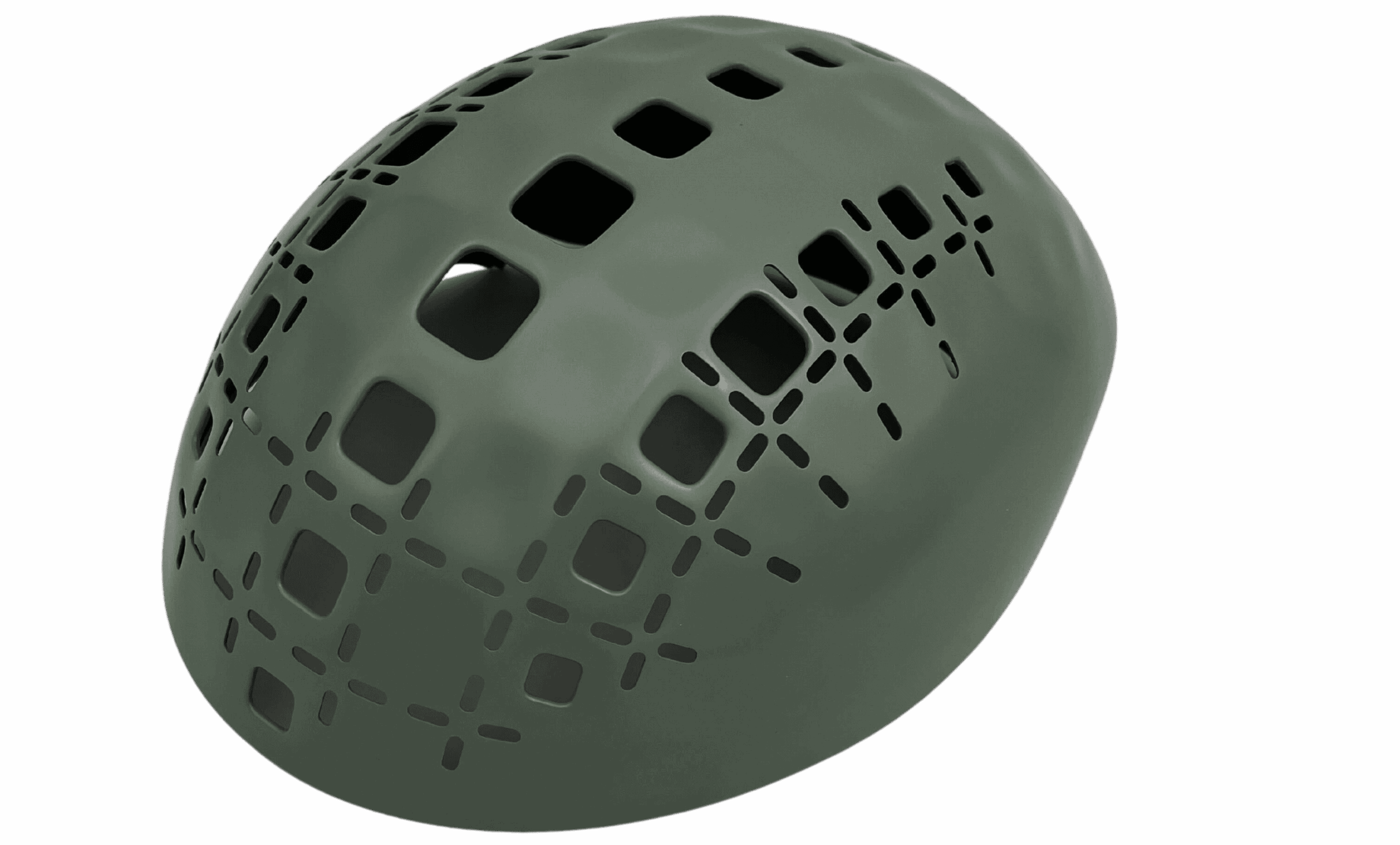
Fused Deposition Modeling (FDM) Design Guide
Get tips and advice for successfully designing parts for FDM.
A standout feature of PolyJet printing lies in its capability to simultaneously print with multiple materials, allowing it to create objects with various material properties or unique color combinations.
The PolyJet printing process begins by depositing ultra-thin layers of liquid photopolymer materials onto a build platform. Multiple print heads jet these materials, similar to how inkjet printers work.
As each layer is deposited, it is rapidly cured using UV light to solidify the material. This creates highly detailed and intricate parts.
PolyJet printing is used across a wide range of industries. One prominent application is in the field of product design and development. This technology allows intricate details, smooth surfaces, and a variety of colors for comprehensive visual evaluation and functional testing.
PolyJet is especially useful for small-batch production and custom components with complex geometries. Furthermore, the ability to print with multiple materials in a single print run provides the flexibility to create parts with different material properties.
Starting at 10 days
0.8 mm (depending on material and geometry)
Vice President of Additive Manufacturing at Siemens Energy
MakerVerse gives you the flexibility to source parts however you need. Get instant quotes and quickly order parts with on-demand manufacturing. Our team of experts will work with you for large or complex orders to develop, align, and supervise a manufacturing quality plan from start to finish.


Get tips and advice for successfully designing parts for FDM.
A precision CNC bracket is three weeks late, the sole supplier blames a machine failure, and production downstream is stalling. At that moment, many procurement managers ask the same question: is the sourcing strategy protecting the operation, or quietly creating the problem? This article moves past generic single-versus-multi pros and cons to address supply chain risk, hidden coordination costs, and the realities of CNC, additive manufacturing, and injection moulding procurement, including the platform-based third path that MakerVerse represents. The Topic in a Nutshell A spectrum, not a binary: Single and multi-sourcing exist on a continuum, with dual sourcing and platform-based models as practical middle paths. Hidden costs beyond unit price: Multi-sourcing custom parts adds supplier qualification, tolerance alignment, and coordination overhead that rarely appears in cost-per-part calculations. Disruption is driving dual-sourcing adoption: The 38% YoY rise in disruptions has pushed procurement teams toward supply chain diversification as a structural risk
Rapid prototyping, customization, and much more.
See what’s driving innovation in 3D printing.