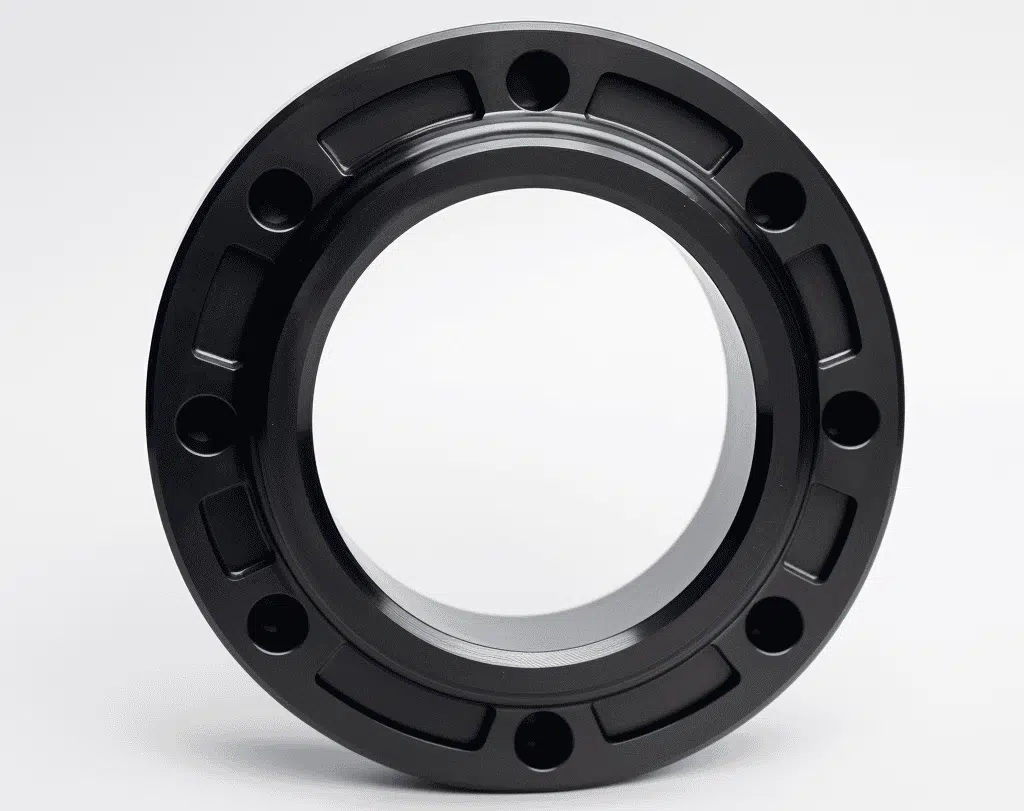
CNC Milling Services

CNC milling is an extremely precise machining process that uses multi-point cutting tools to manufacture parts.

The computer-controlled manufacturing process is compatible with virtually any material and is characterised by high standards in terms of accuracy and surface quality.

In addition, CNC milling is a particularly efficient technology that enables short lead times for prototypes as well as series production.

MakerVerse simplifies the entire procurement process through a modern platform that combines instant quotes, verified suppliers and transparent processes.

cnc milling in action

How does CNC milling work?

CNC milling is a computer-controlled manufacturing process in which rotating milling tools precisely remove material from a workpiece.

The abbreviation CNC stands for “Computerised Numerical Control” and means that the entire machining process is automated by digital control. In contrast to manual machining, CNC milling guarantees the highest repeatability and enables the production of complex geometries with tight tolerances. The digital workflow begins with a CAD model and ends with the finished, quality-tested component.

CNC milling in action

From CAD model to CNC milling machine

The CNC milling process begins with the creation of a CAD file (Computer-Aided Design), which defines the exact geometry of the component. This file is then imported into CAM software (Computer-Aided Manufacturing), which programs the tool paths from it and generates the machine-readable G-code. This code contains all instructions for the CNC control system: movements, speeds and tool changes. Common file formats include STEP, STL, IGES and Parasolid.

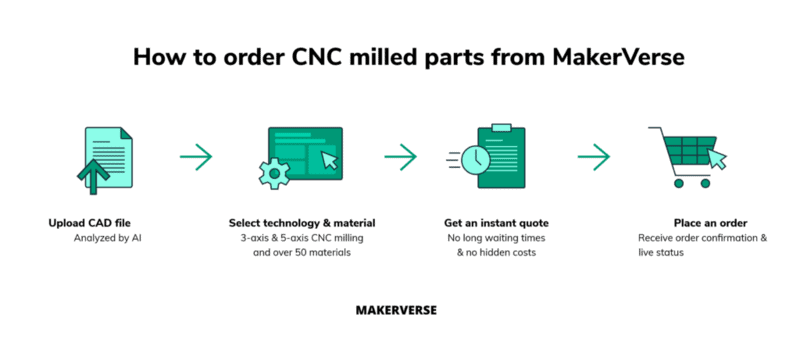
MakerVerse accepts numerous CAD formats and automatically generates binding quotes within minutes.

3-axis milling vs. 5-axis milling

3-axis milling machines move the tool along the X, Y and Z axes and are ideal for simpler geometries such as plates, housings or brackets. 5-axis milling machines additionally have two rotational axes (A and B axes) that can rotate the tool or workpiece. This allows complex free-form surfaces, undercuts and three-dimensional contours to be produced in a single operation. The number of set-ups is significantly reduced, which saves time and increases precision.
Feature3-Axis5-Axis
AxesX, Y, ZX, Y, Z + A, B
ComplexitySimple to medium geometriesHighly complex free-form surfaces
Set-upsMultiple requiredUsually a single operation
ApplicationsHousings, plates, bracketsTurbine blades, prototypes, medical technology

CNC milling process step by step

  1. CAD upload: The technical drawing or 3D model is uploaded to MakerVerse and automatically analysed.
  2. CAM programming: The CAM software generates optimised tool paths and creates the G-code for the CNC machine.
  3. Tool selection: Suitable milling cutters are selected based on material, geometry and desired surface quality.
  4. Workpiece clamping: The raw material is precisely fixed in the CNC milling machine to avoid vibrations and displacement.
  5. Milling operation: The CNC machine executes the programmed movements and removes material with high precision.
  6. Quality control: After machining, dimensional accuracy and surface quality are inspected, often using 3D metrology.
  7. Surface finishing: Optionally, post-processing such as deburring, blasting, anodising or coating is carried out for final use.

Benefits of CNC milling

CNC milling offers decisive advantages for industrial manufacturing and has established itself as the preferred process for procurement managers and engineers. Computer-controlled precision, combined with economic flexibility, makes CNC milling the ideal solution for demanding projects.
  • High precision and repeatability
    Tolerances up to ISO 286 IT7 (±0.015 mm). Computer-controlled machining eliminates human error and guarantees identical quality across all parts.
  • Complex geometries in a single operation
    Free-form surfaces, undercuts and 3D contours – even demanding components for aerospace or medical technology are manufactured precisely.
  • Wide material selection
    From aluminium to titanium to engineering plastics (PA, POM, PTFE) – over 150 materials consistently available.
  • Flexible from prototype to high-volume
    No tooling costs, no minimum quantities. Design changes can be implemented quickly through simple CAD adjustments.
  • Short lead times
    Automated processes and digital workflows significantly accelerate production compared to traditional procurement.
  • Cost-effective for prototypes to medium series
    Without initial tooling costs as with injection moulding – economical from as few as 1 unit.
  • Guaranteed quality through a verified network
    ISO 9001-certified manufacturing, standardised quality controls and optional measurement reports.

Key technical data

Tolerances:

  • Standard according to ISO 2768-m, depending on nominal dimension
  • Increased precision up to ±0.05 mm
  • Fits and functional features up to ±0.013 mm on request

Maximum component size:

  • Standard up to 2,000 × 800 × 500 mm
  • Larger dimensions up to 12 m in length depending on the project on request

Materials:

  • Metals: Aluminium, steel (including tool steel and stainless steel), titanium, brass, copper, superalloys
  • Plastics: POM, ABS, Nylon (PA), PEEK, Polycarbonate (PC), PTFE (Teflon), PVC, PE-UHMW

Typical applications​ for CNC milling

Housings and structural components

Brackets and mounting plates

Functional prototypes made from series production material

Fixtures, tools and operating equipment

Order CNC milled parts online at MakerVerse

MakerVerse combines the efficiency of digital procurement with personal service and technical expertise. Our platform automates time-consuming processes such as quoting and supplier sourcing, while a dedicated contact person is available for technical questions and project support.

Compared to traditional procurement, you save up to 75% of time – from enquiry to delivery. The verified manufacturing network with over 1,000 CNC machines guarantees consistent quality to ISO 9001 and short lead times from 6 working days for aluminium and steel parts.

On-demand manufacturing

  • Instant quoting and DFM checks
  • Short lead times
  • Fast and intuitive order placement

Production Orders

  • Expert support from end-to-end
  • Comprehensive manufacturing and quality plan
  • Guaranteed quality meeting advanced specifications

MakerVerse really took the time to understand our project and help us. Working together was a great experience, as they were always so open and transparent about all the parts we ordered.

Camilla Chitvanni

Co-Head of Engineering at Swissloop Tunneling

CNC milling use cases

CNC milling is one of the most versatile manufacturing processes and is used in virtually every industry. From rapid prototype manufacturing to economical small series through to high-volume production, the process covers a broad spectrum. The combination of high precision, material diversity and flexibility makes CNC milling the first choice for demanding components across a wide range of industries.
Prototype manufacturing
CNC milling is ideal for functional prototypes, as it enables rapid iterations without tooling costs. Design changes can be implemented immediately through simple CAD adjustments. Unlike additive processes, prototypes can be manufactured from the original materials of the later series, allowing realistic testing of mechanical properties, fits and assemblies.
Small series and series production
CNC milling remains economical for quantities from 1 to over 10,000 parts, as no initial tooling costs are incurred. Flexible adjustments are possible at any time – a decisive advantage over casting processes with fixed moulds. For larger series, MakerVerse offers dedicated framework agreements for series production with volume discounts, personal support and guaranteed quality throughout the entire contract period. Framework contracts secure long-term stable prices and plannable delivery dates for recurring needs.

CNC milling materials

Choosing the right material is crucial for the function, durability and cost-effectiveness of your CNC milled parts. Each material brings specific mechanical, thermal and chemical properties that must match the respective application.

MakerVerse offers access to over 150 materials for your CNC milled parts, from standard materials to specialised high-performance alloys. The integrated Material Advisor supports you in making the optimal material selection for your specific application and guarantees consistent availability throughout the entire project duration.

Surface finishes for CNC milled parts

MakerVerse offers over 30 surface finishes for your CNC parts – all from a single source. You receive ready-to-install components that precisely meet your functional and aesthetic requirements, without having to coordinate additional procurement channels.

Technology: CNC
Stress relief annealing finish for CNC parts

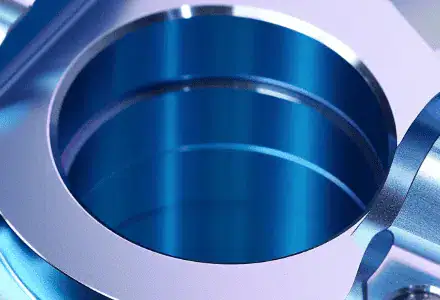
Stress relief annealing

CNC

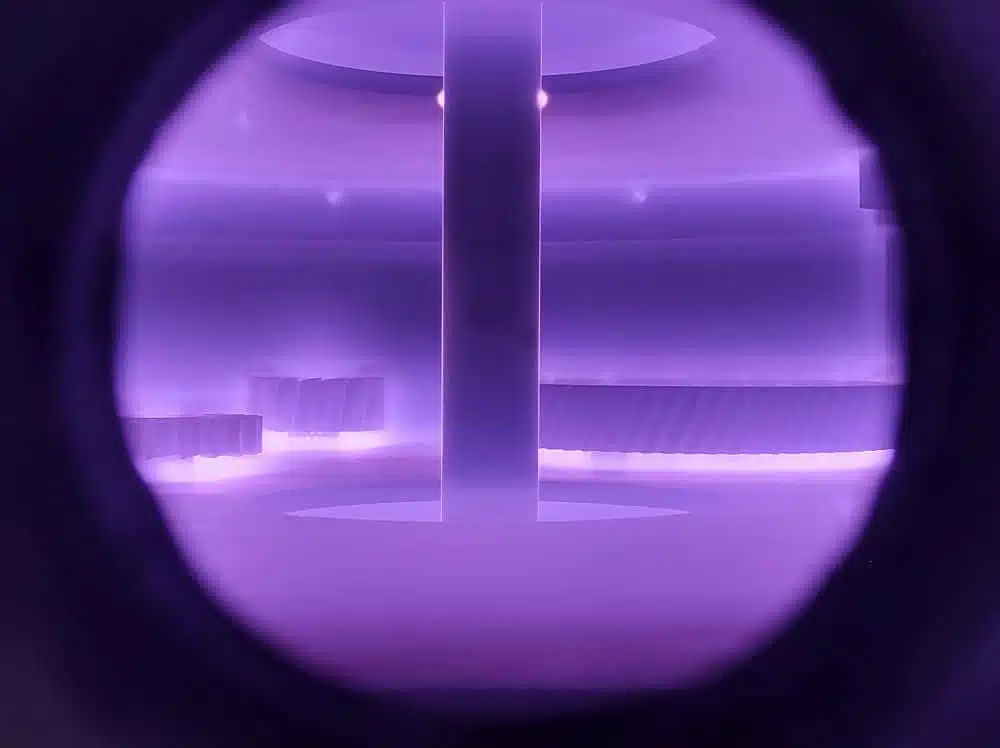
In stress relief annealing, metal parts are heated to a specific temperature and slowly cooled. This process reduces hardness, increases ductility and relieves internal stresses, making the material easier to machine.
Selected: CNC machining
Anodising finish for CNC parts

Anodising

CNC

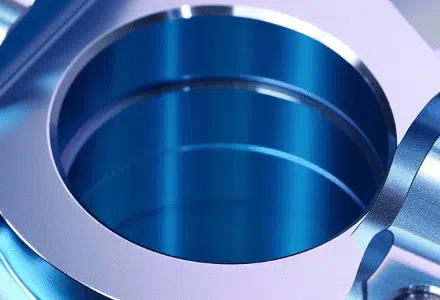
This electrochemical process increases the thickness and hardness of the natural oxide layer on the surface of metal parts. Anodising provides a protective, corrosion-resistant and decorative surface.

Selected: CNC machining
Black oxide coating finish for CNC parts

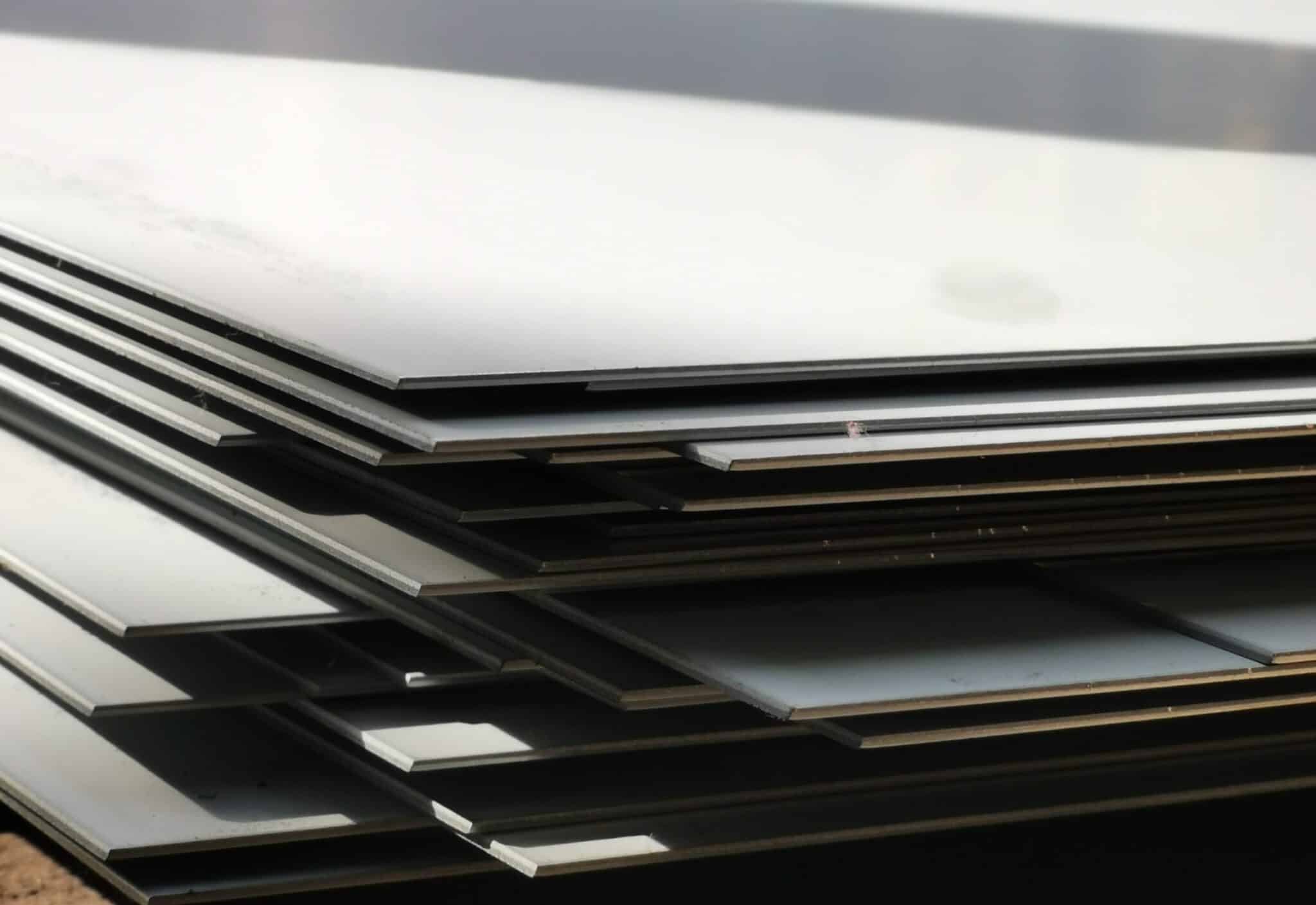
Black oxide coating

CNC

This process creates a black oxide layer on the surface of metal parts. Black oxide coating provides a durable and corrosion-resistant surface.
Selected: CNC machining
Electrogalvanising finish for CNC parts

Electrogalvanising

CNC

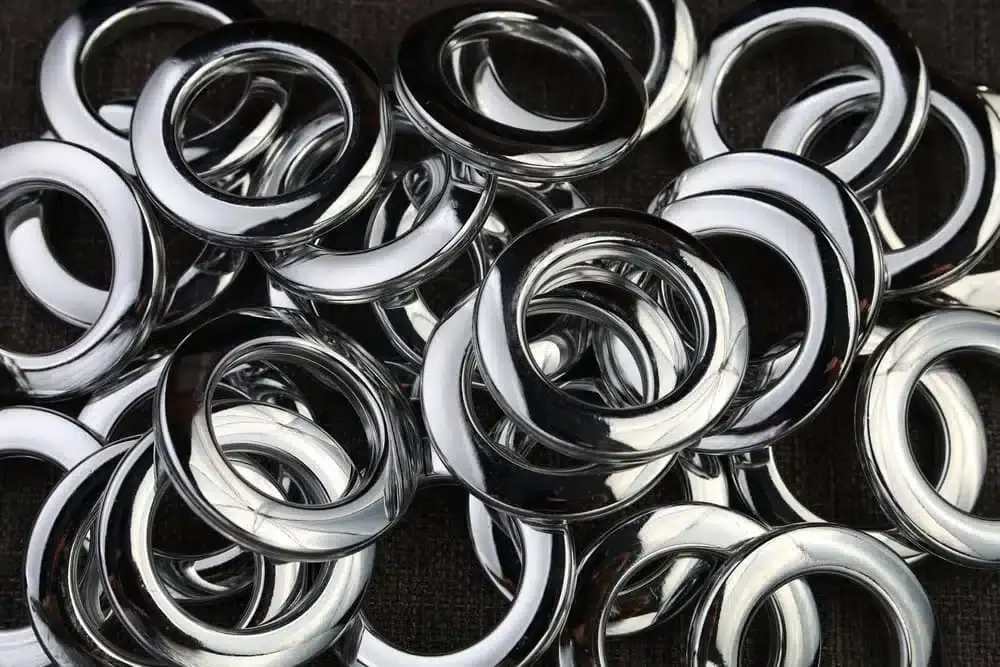
A zinc layer is applied to metal parts via an electrically applied voltage. Electrogalvanising offers excellent corrosion resistance and a smooth surface and can serve as a base for further painting or coating.
Selected: CNC machining
Nickel plating finish for CNC parts

Nickel plating (coating)

CNC

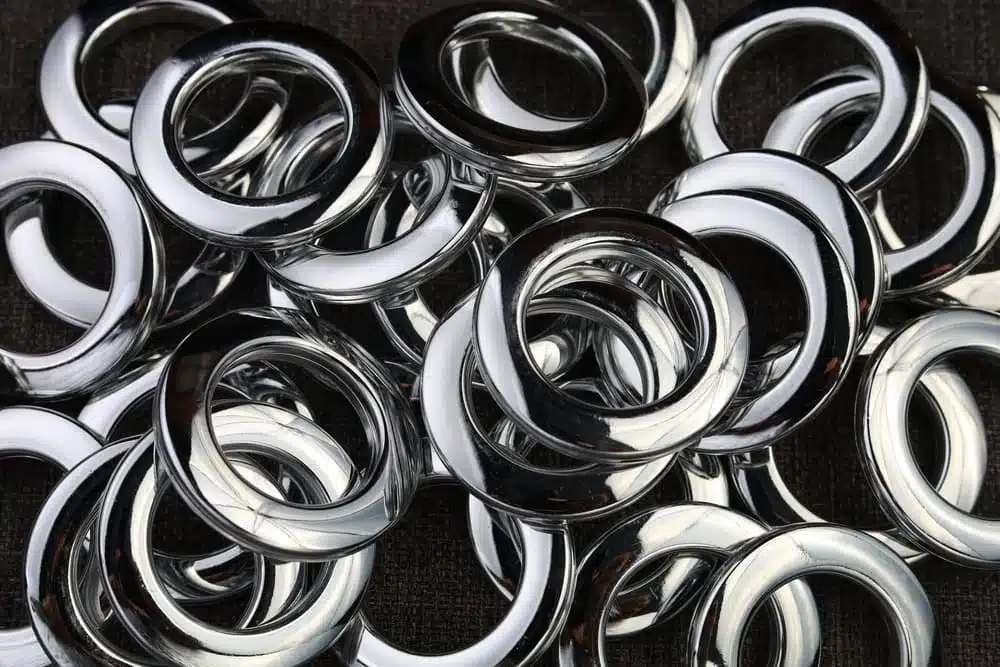
In this electroplating process, a nickel layer is applied to the surface of metal parts. Nickel plating increases corrosion resistance, protects against wear and can provide an attractive, glossy or matte surface.

Selected: CNC machining

Annealing

Annealing involves heating metal parts to a specific temperature and slowly cooling them. This process reduces hardness, increases ductility, and relieves internal stresses, making the material easier to work with.

Anodizing

This electrochemical process increases the thickness and toughness of the natural oxide layer on the surface of metal parts. Anodizing provides a protective, corrosion-resistant, and decorative finish.

Black oxidizing

Also known as blackening, this process creates a black oxide coating on the surface of metal parts. Black oxidizing provides a durable and corrosion-resistant finish.

Electrogalvanization

A layer of zinc is electrically deposited onto metal parts. Electrogalvanization provides excellent corrosion resistance and a smooth finish and can serve as a base for further painting or coating.

Nickel plating

This electroplating process deposits a layer of nickel onto the surface of metal parts. Nickel plating enhances corrosion resistance, adds wear protection, and provides an attractive finish.

Why MakerVerse for your CNC milled parts?

  • Quote in minutes – Automatic calculation instead of waiting for days
  • Fixed price – Transparent, with no hidden costs
  • From 6 working days – Guaranteed delivery dates, express option available
  • 150+ materials – Largest selection for metal and plastic milled parts
  • 3- to 5-axis milling – For simple to highly complex geometries
  • Expert service – Online tool + personal consultation when needed
  • Complete solution – Milling, post-processing & finishing from a single source

FAQ: Frequently asked questions about CNC milling

What is CNC milling?

CNC milling is a computer-controlled subtractive manufacturing process in which rotating milling tools precisely remove material from a workpiece. The abbreviation CNC stands for “Computerised Numerical Control”. The process enables the highest precision and repeatability when machining versatile materials such as metals, plastics and superalloys – from single prototypes to high-volume production.

How much does CNC milling cost at MakerVerse?

The cost of CNC milled parts depends on material, component size, geometric complexity, quantity and chosen surface finish. After uploading your CAD file, you receive a binding instant quote within minutes – transparent and with no hidden costs. Using the Target Price function, you can specify a desired price, which MakerVerse manually reviews and fulfils where possible.

How quickly can MakerVerse deliver my CNC milled parts?

Standard lead times for CNC milled parts are 9 to 12 working days. For aluminium and steel parts, MakerVerse offers express machining from 6 working days. The exact lead time depends on component complexity, chosen surface finish and current capacity. The binding lead time is transparently displayed in the quote, so you can plan with confidence.

What is the difference between 3-axis and 5-axis milling?

3-axis milling machines move the tool along the X, Y and Z axes and are suitable for simpler geometries such as plates or housings. Multiple set-ups are often required. 5-axis milling machines additionally have two rotational axes (A and B axes) that enable complex free-form surfaces and undercuts in a single operation. MakerVerse offers both technologies for optimal cost-effectiveness.

What tolerances does MakerVerse achieve in CNC milling?

Standard tolerances follow ISO 2768 medium (±0.1 mm) or fine (±0.05 mm). On request, tighter tolerances down to ±0.02 mm are possible, depending on material, geometry and chosen manufacturing process. Upload technical drawings with tolerance specifications – the system automatically takes these into account during quoting and production planning.

Can I also have individual parts or prototypes milled at MakerVerse?

Yes, MakerVerse manufactures from a quantity of 1 with no minimum order quantity. The platform is ideal for prototypes, sample parts and one-off productions. You receive the same quality as with series parts, benefit from fast lead times and can implement design changes flexibly. Automated processes make even individual parts economical.

What materials can MakerVerse manufacture CNC milled parts from?

MakerVerse offers over 270 materials for CNC milled parts: metals such as aluminium, steel, stainless steel, titanium, brass and tool steel as well as engineering plastics such as PA, POM and PTFE. Superalloys for high-temperature applications are also available. The integrated Material Advisor supports you in making the optimal material selection. Consistent availability is guaranteed throughout the entire project duration.

How do I upload my CAD file to MakerVerse?

Visit the MakerVerse platform and click on “Upload parts”. Upload your CAD file – preferably STEP or STL, but over 50 additional formats are supported. Select material and desired surface finish. Within minutes, you receive a binding instant quote that you can order directly online. A simple 3-step process with no waiting time.

CNC Machining Resources

Rapid Prototyping: The Key to Successful Product Development

How does an innovative idea become a marketable product? A crucial phase lies between the initial concept and series production: rapid prototyping. This process allows for the early validation of design and functionality before significant investments are made in tooling. Instead of relying on costly corrections during series production, designers can achieve optimal results through iterative testing as early as the development phase. MakerVerse supports companies with a digital platform that provides access to all major manufacturing technologies – from 3D printing and CNC machining to injection molding.

Read more

Let’s build together

Schedule a consultation with our specialists to kickstart your project.