
Choosing the Right Surface Finish for CNC Machining
Want to get the most out of your machined part? Here’s what you need to know about finishes.


Co-founder and managing director at DeepDrive


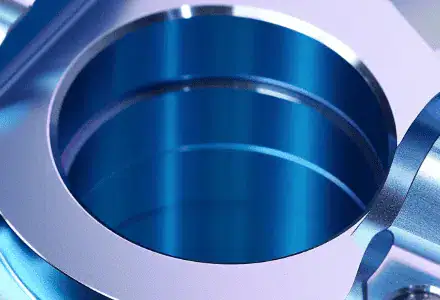
This electrochemical process increases the thickness and toughness of the natural oxide layer on the surface of metal parts. Anodizing provides a protective, corrosion-resistant, and decorative finish.
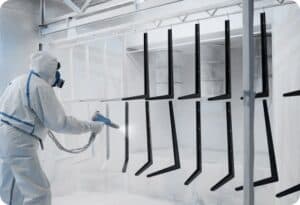
Additional color is applied to the printed part, often by a professional spray painting system. The part is properly prepared through accurate cleaning and a clearcoat to get the desired output.

Also known as blackening, this process creates a black oxide coating on the surface of metal parts. Black oxidizing provides a durable and corrosion-resistant finish.

Abrasive sand is applied to the component under high pressure. This provides functional benefits (achieving a certain surface roughness) and optical advantages (polishing the surface).

The metal part is heated to a specific temperature and then slowly cooled to achieve the desired level of hardness and toughness. Tempering improves the strength and toughness of the metal parts, making them more resistant to impact and wear.
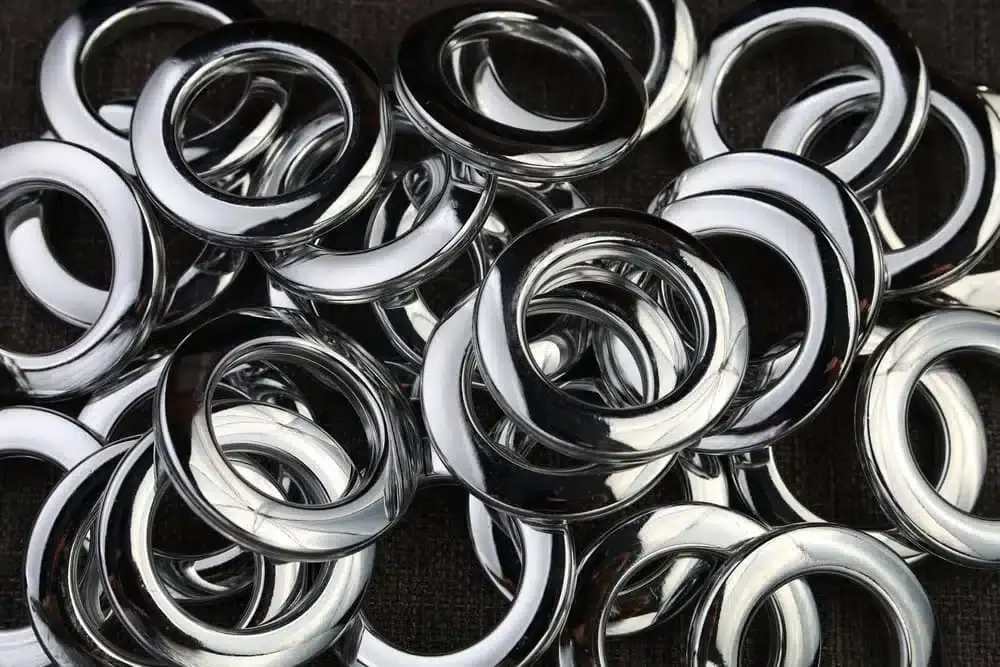
This electroplating process deposits a layer of nickel onto the surface of metal parts. Nickel plating enhances corrosion resistance, adds wear protection, and provides an attractive finish.






 Aluminum Brass PA PTFE POM Steel Superalloys Titanium Tooling steel Aluminum
A good balance of strength, hardness, and dynamic properties values characterizes aluminum and its related alloys. It’s a lightweight, malleable metal that is easy to machine and has good corrosion resistance.
Aluminum is commonly used in the aerospace, automotive, and electronics industries for parts such as housings, brackets, and heat sinks.
BrassBrass is a corrosion-resistant alloy made from copper and zinc. The main benefits are that its easily machinable and has good thermal and electrical conductivity.
Brass is often used for decorative applications and in plumbing, hardware, and electrical components.
PAPA (Polyamide), also known as nylon, is a strong, lightweight polymer. It offers good wear resistance and low friction.
This polymer is often used for gears, bearings, and structural components in various industries, from automotive to consumer goods.
PTFE PTFE (Polytetrafluoroethylene), also known as Teflon, is a highly heat-resistant and low-friction polymer. This material also offers excellent chemical resistance.
PTFE is commonly used in applications that require non-stick properties, such as bearings, seals, and electrical components.
POM POM (Polyoxymethylene), also known as Acetal, is a strong and stiff polymer. It offers good dimensional stability combined with low friction.
Various industries often use POM for gears, bearings, and electrical components
Steel Steel is characterized by high yield strength and strong corrosion resistance. It’s a multi-purpose metal offering both good weldability and machinability.
Steel is widely used for everything from vales to fittings to medical instruments. Many industries, from aerospace to food processing, use stainless steel.
Superalloys Superalloys are high-performance alloys offering excellent heat resistance, strength, and corrosion resistance.
Superalloys are commonly used in the aerospace and energy industries for heavy-duty parts such as turbine blades, exhaust systems, and heat exchangers.
Titanium
Due to titanium’s biocompatibility, it is used for medical and dental applications. Its high strength and comparatively low weight make it appealing for high-performance parts like gearboxes and connecting rods in racing cars and bionic brackets in the aviation industry.
Tooling steelTooling steel is characterized by a high tensile strength and a high toughness. It can be used in higher temperatures since its mechanical properties remain stable at high temperatures. Heat treatment can further optimize mechanical properties.
This metal is often used for tooling inserts for injection molding, extrusion tool inserts, or for functional prototypes. Furthermore, this tooling steel can be used for tooling and fixtures.
Want to get the most out of your machined part? Here’s what you need to know about finishes.

Protect your CNC parts with this popular finish.

Discover how CNC machining accelerates prototyping.

Master your CNC machining projects with the best CAD file formats.